Legalize Queer Joy
 Ian Danger Capstick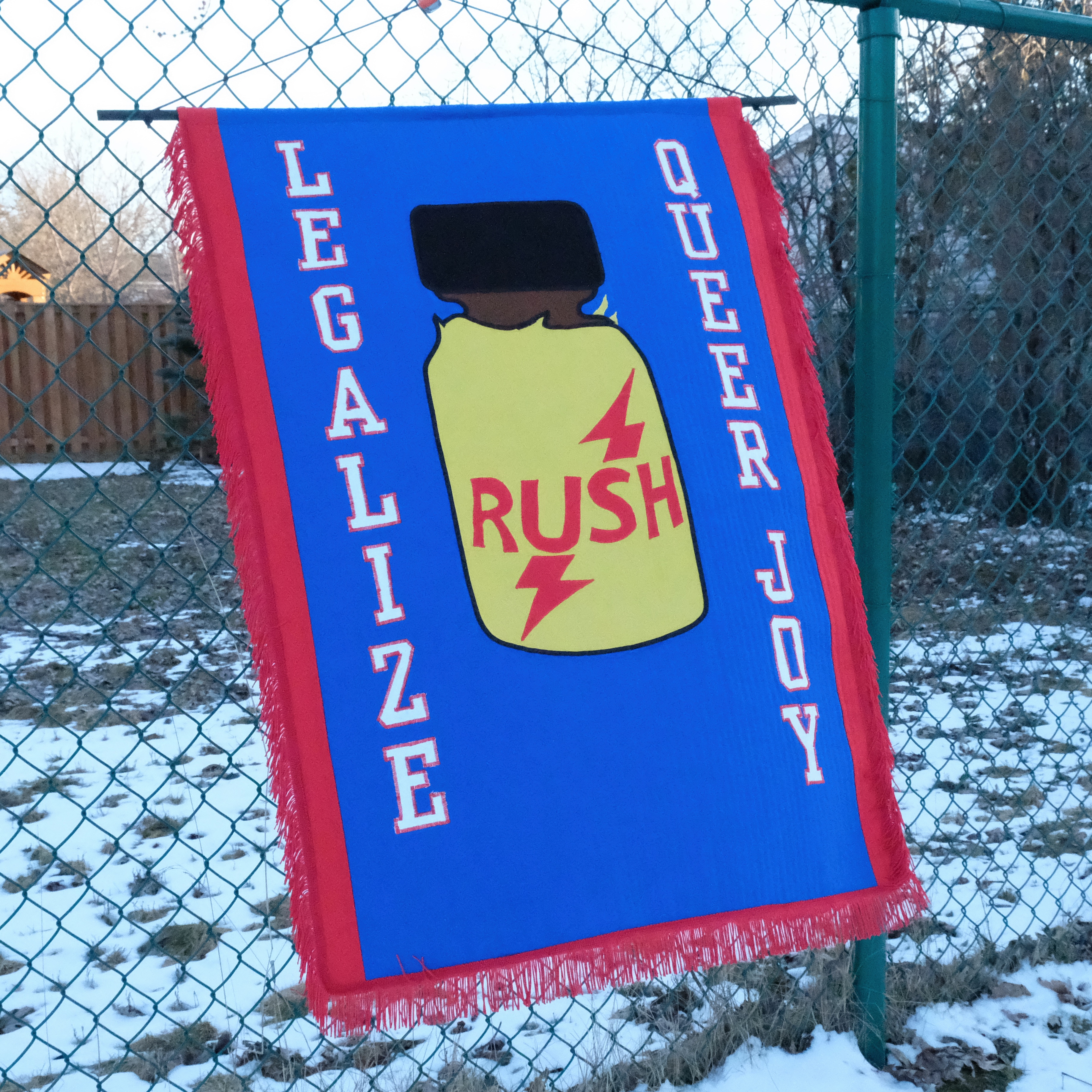
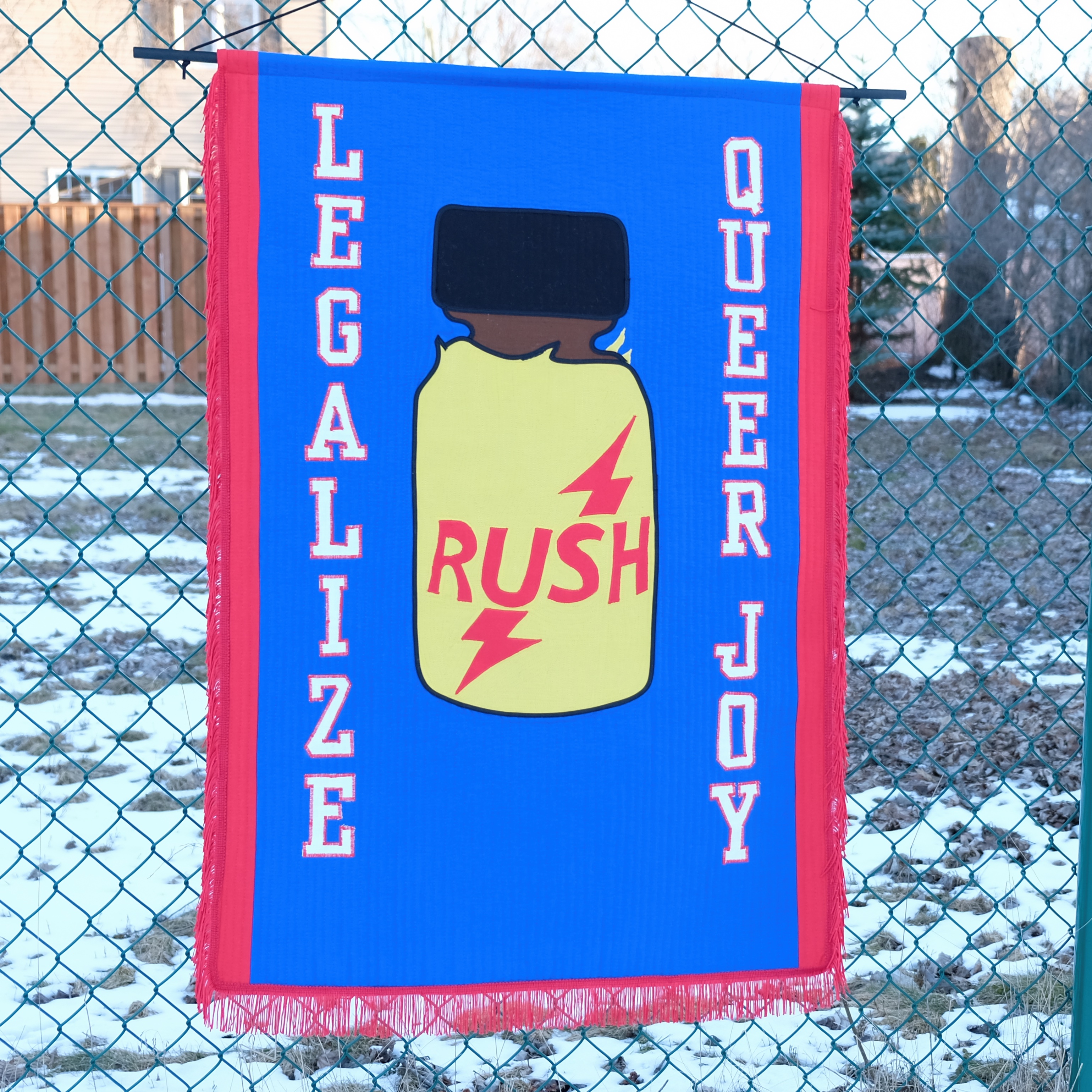
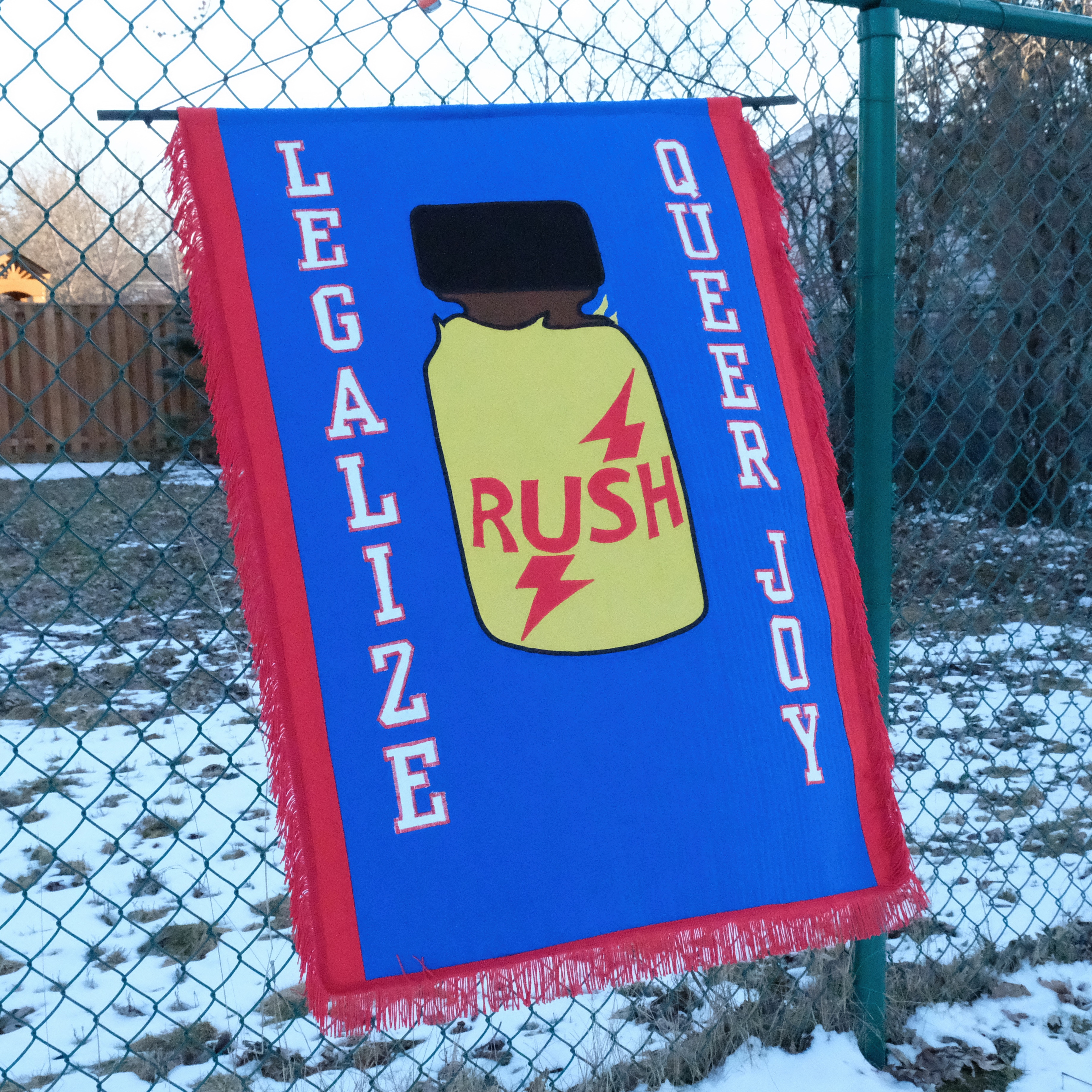
This banner challenges Canada's ban on poppers, alkyl nitrites that have been part of queer nightlife culture since the 1970s. In 2013, Health Canada classified poppers as illegal drugs despite decades of relatively low-risk recreational use and a lack of scientific evidence supporting prohibition. The ban was about morality, not medicine.
I made this banner because drug policy that targets queer communities without scientific basis is a form of social control. Bodily autonomy means the right to make informed choices about your own body. When regulations aren't grounded in evidence, they deserve to be questioned, loudly, in fabric, with a fancy red fringe.
Construction
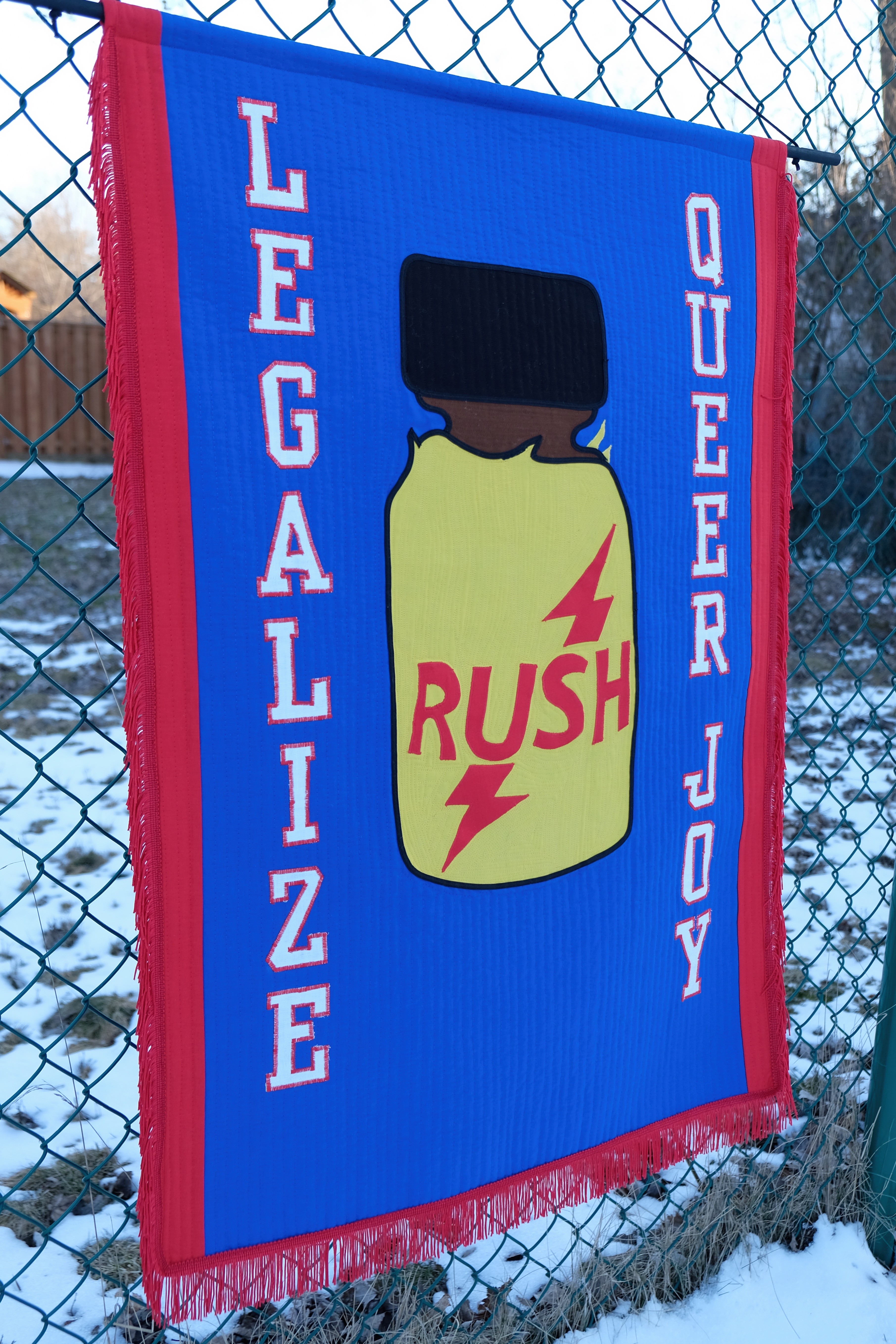
The lettering is raw edge appliqué, hand-cut letters attached with a zigzag stitch over the raw fabric edges. I prefer raw edge because it's honest about what it is. The edges fray over time, which gives the banner texture and history as it ages. The red fringe across the bottom is decorative and deliberate: protest banners should be beautiful enough to stop people in their tracks, even before they read the words.
Context
The history of drug regulation targeting queer communities is long. From the criminalization of spaces where gay men gathered to the moral panics around recreational substances associated with queer nightlife, drug policy has frequently been used as a proxy for policing sexuality. The poppers ban fits this pattern, a regulation that appears to be about public health but functions as social control over queer bodies and queer pleasure.
I titled the banner "Legalize Queer Joy" rather than "Legalize Poppers" because the issue is bigger than one substance. It's about the right to pleasure, to celebration, to uninhibited joy in your own body, things that queer people have always had to fight for.
LEGALIZE QUEER JOY · 2025 · Quilting cotton, raw edge appliqué, decorative fringe