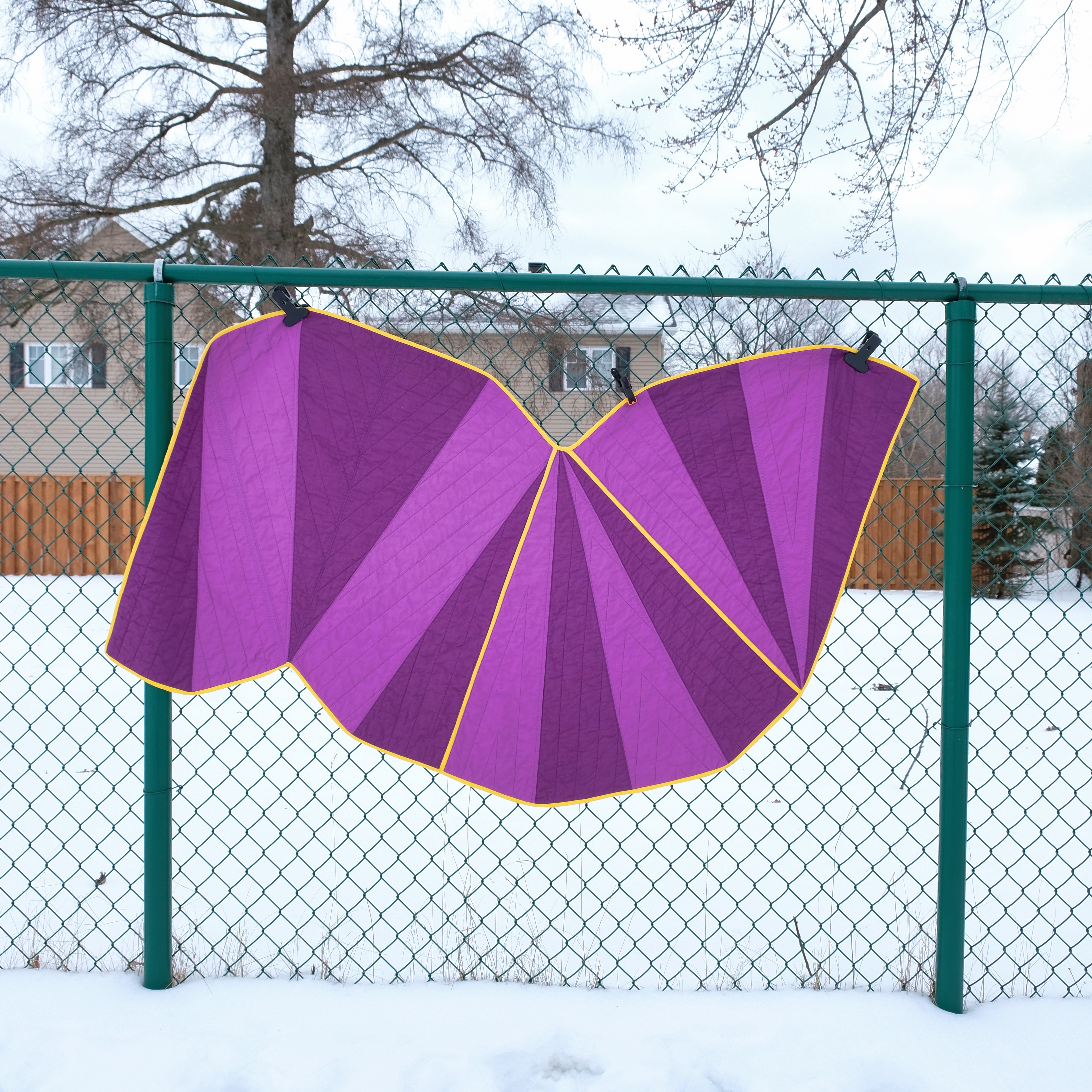
Purple: Spirit Cape
 Ian Danger Capstick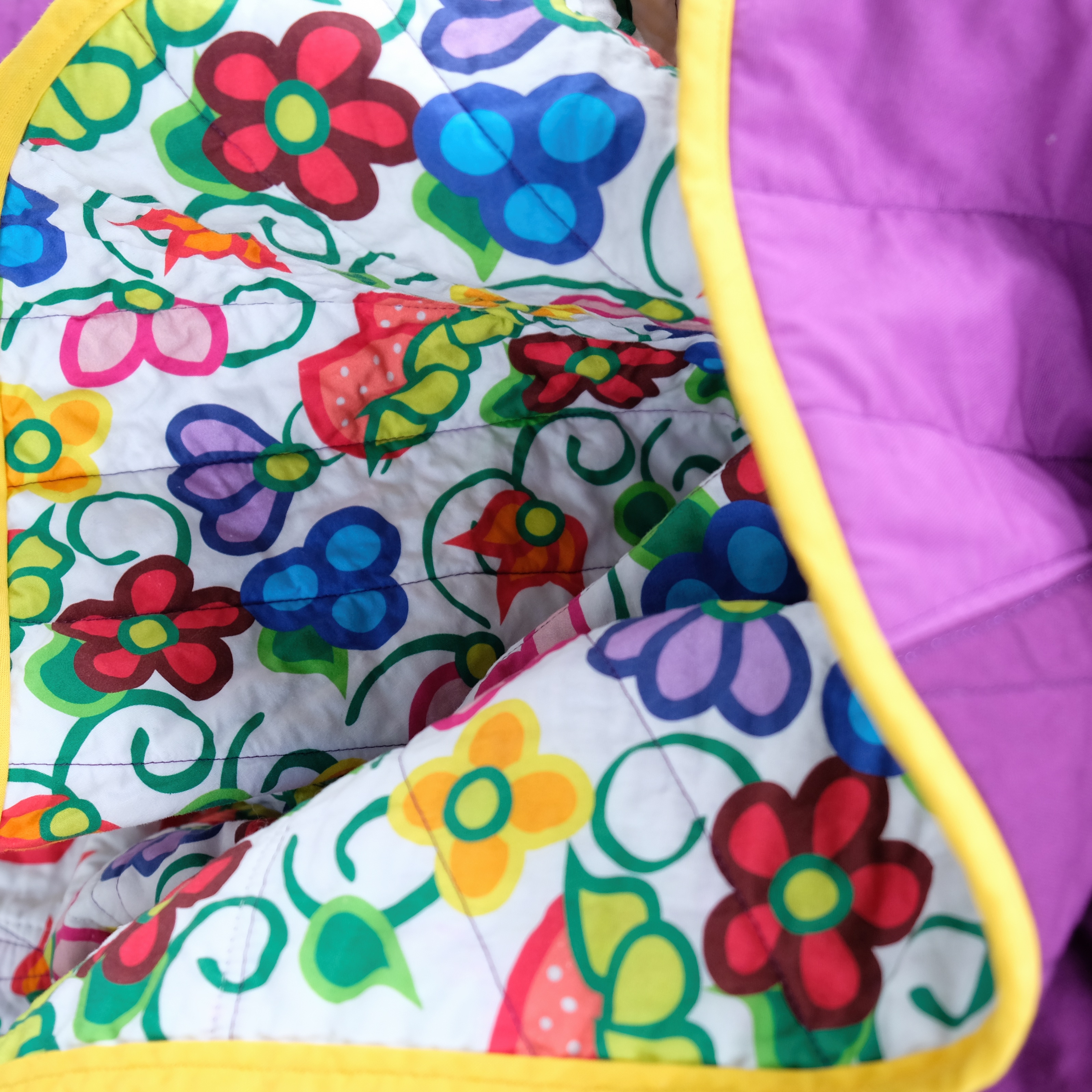
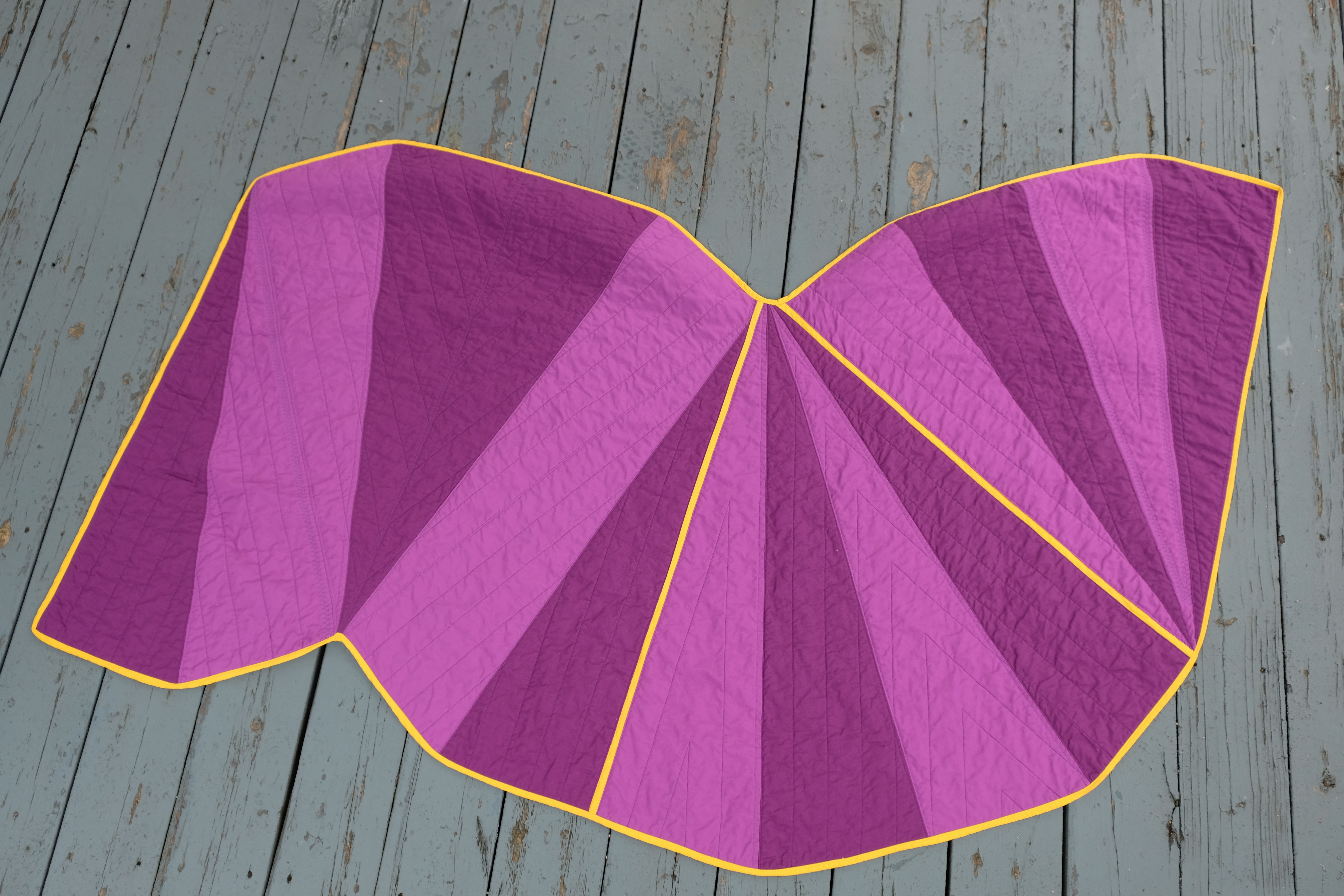
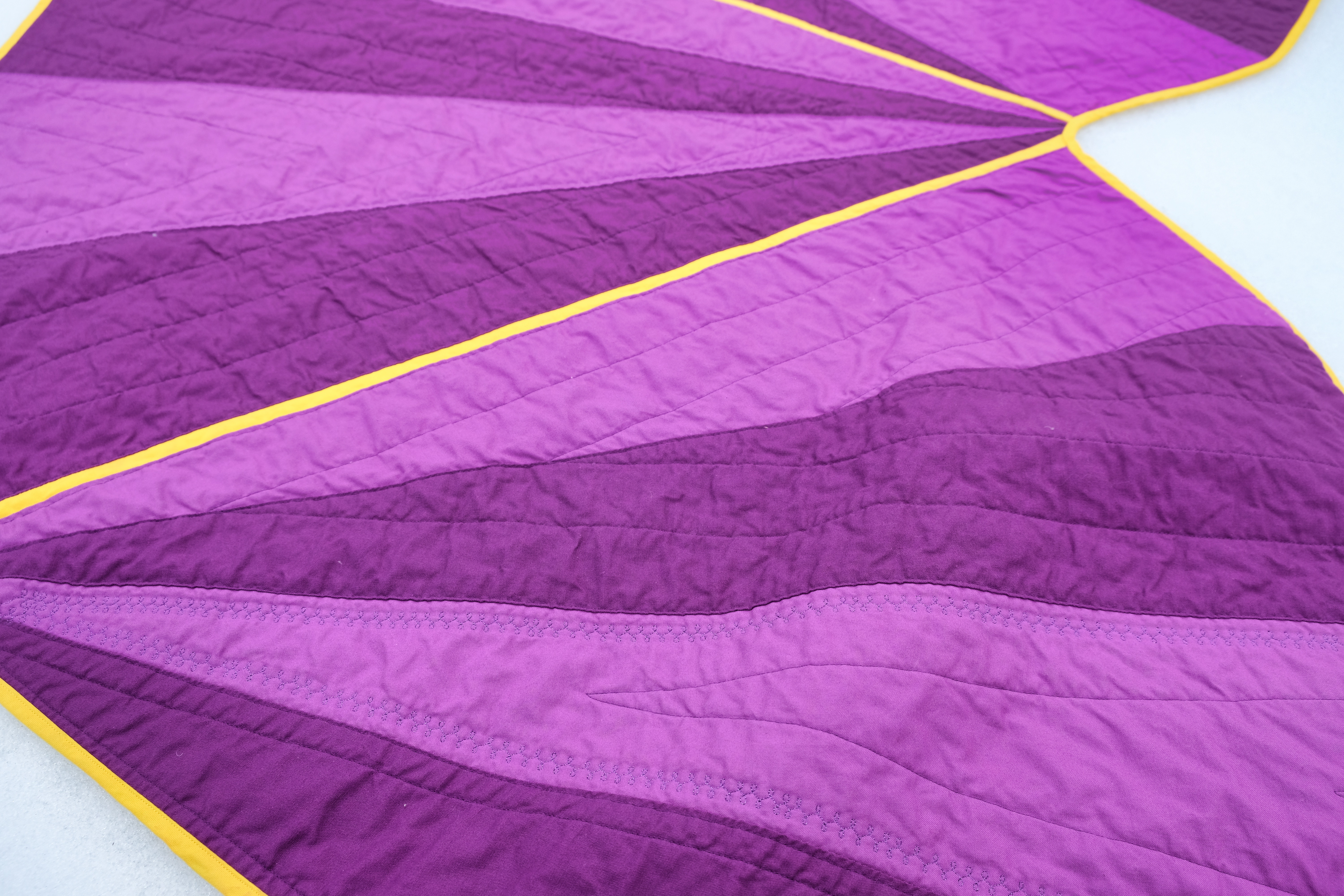
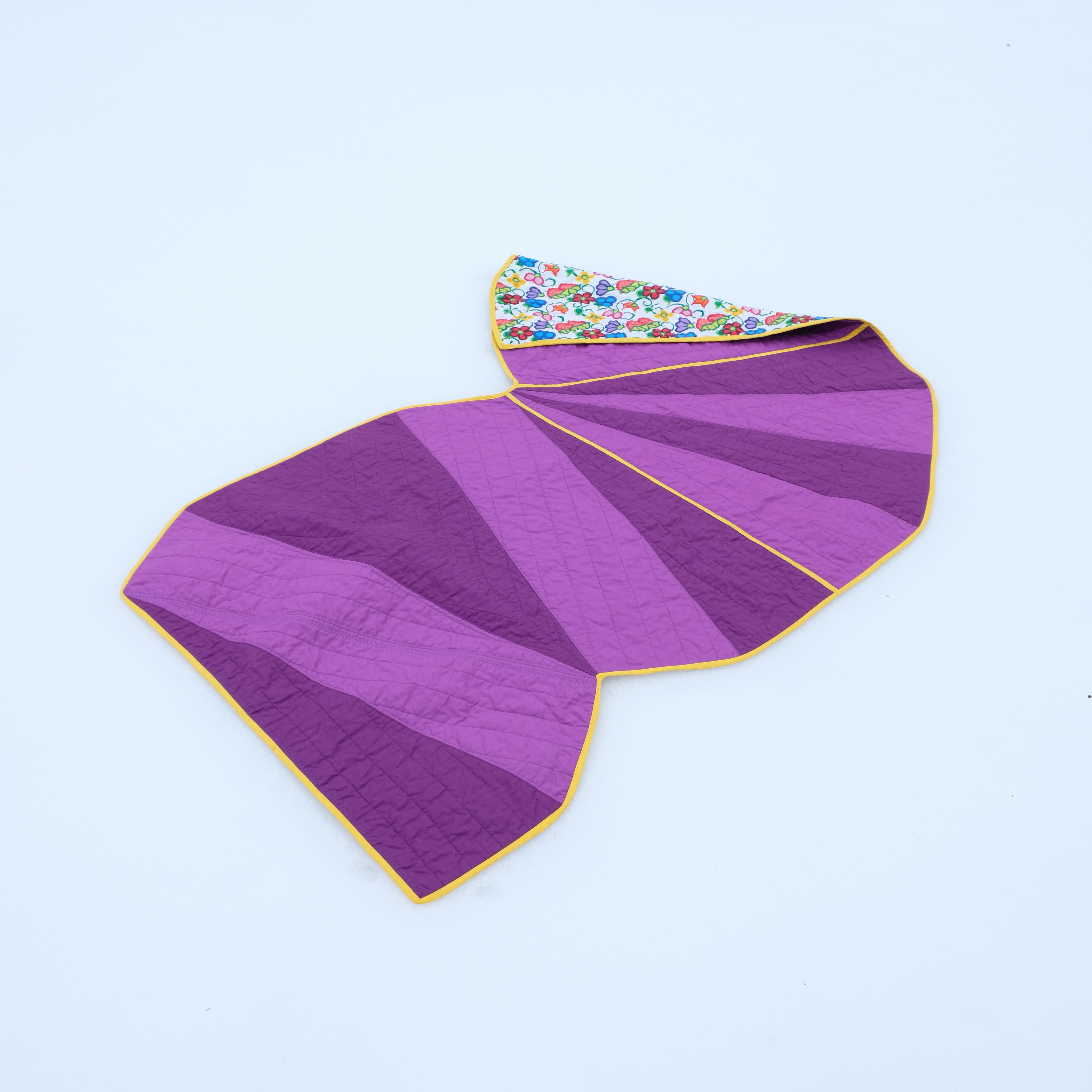
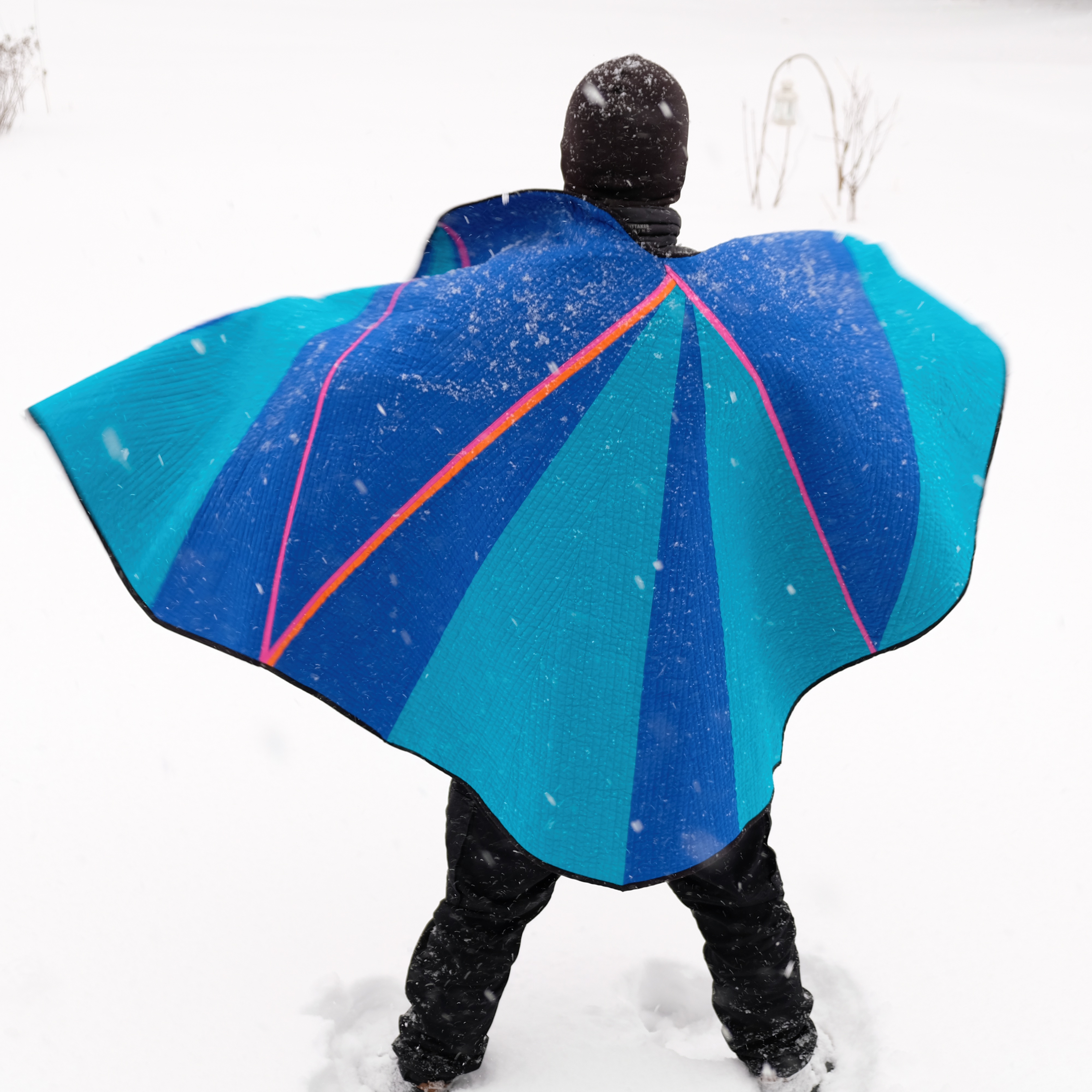
Spirit Cape celebrates purple from Gilbert Baker's original Pride flag, where it represents spirit. Not in the religious sense, but as the animating force that makes a community more than a collection of individuals. Baker placed purple at the bottom of the flag, grounding everything above it. This cape is the fifth in my Colours of Pride series.
I created this cape as a gift for a Two-Spirit friend. That relationship shaped every decision in the piece, from the colour palette to the lining to the materials I chose to work with.
Materials and Meaning
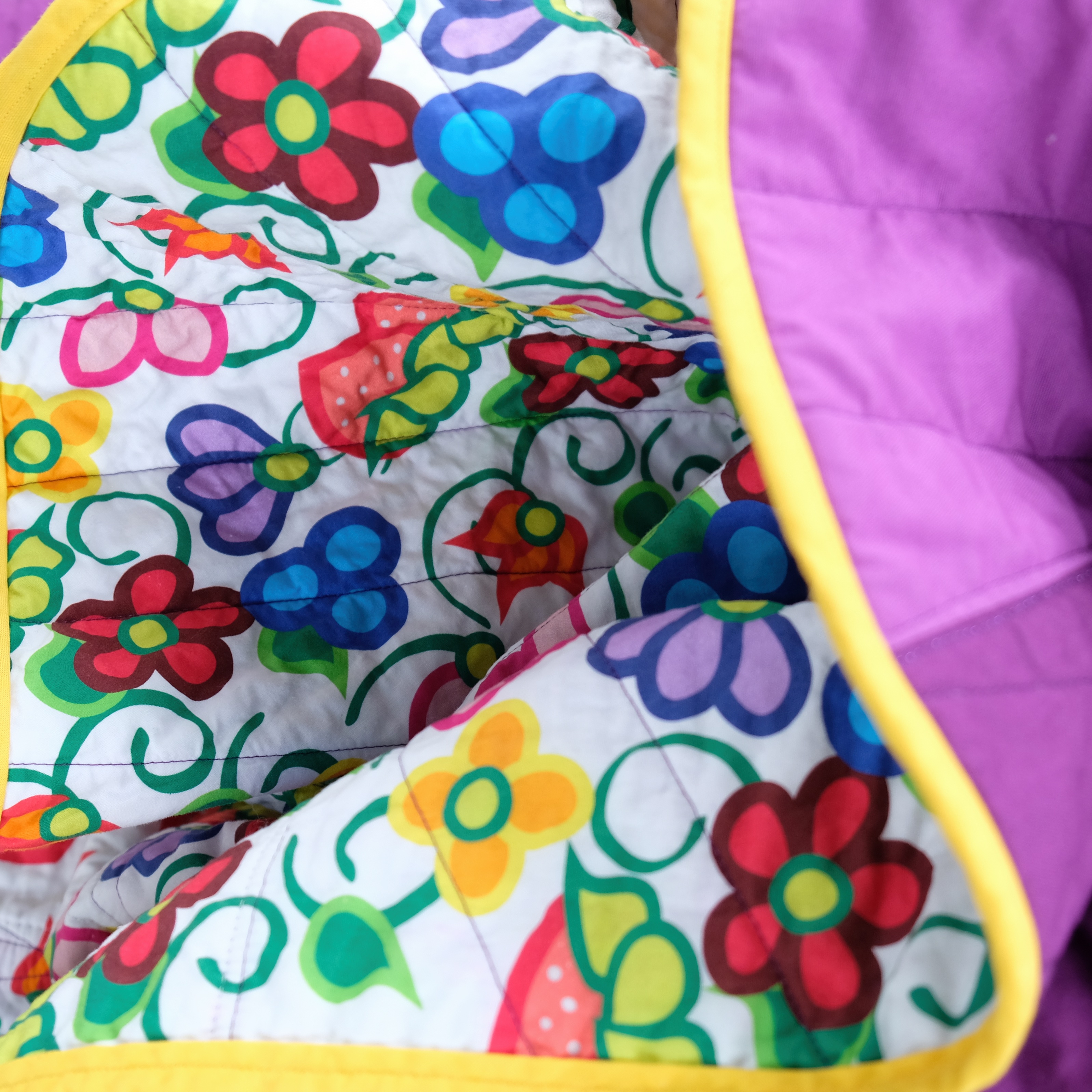
The splash of colour from the Progress Pride flag on the inside is featured alongside fabric by Carrie Okemaw, an artist connected to Manto Sipi Cree Nation and the Anishinaabe community of Berens River First Nation. Carrie created this textile design for Marshall Fabrics. Using Indigenous-designed fabric in a quilt about spirit and community felt essential, a recognition that Two-Spirit identity has deep roots in Indigenous cultures that predate colonial frameworks for understanding gender and sexuality.
The cape's yellow elements, interwoven throughout the purple, symbolize the power and resistance of Two-Spirit people. Yellow appears in the Progress Pride flag chevron and carries its own meaning in Baker's original design (sunlight, visibility). Here, it acts as a thread connecting the Two-Spirit experience to the broader queer community while maintaining its own distinct presence.
About Two-Spirit Identity
The term Two-Spirit is used by some Indigenous People to describe themselves. It was developed in 1990 during the Third Annual Inter-tribal Native American, First Nations, Gay and Lesbian American Conference held in Winnipeg. The term was intended to replace pejorative anthropological labels previously imposed by settlers and to differentiate Indigenous concepts of gender and sexuality from Western frameworks. Two-Spirit identity is specific to Indigenous cultures and cannot be claimed by non-Indigenous people.