The Gilbert Baker Pride Flag: What Each Colour Means
 Ian Danger Capstick
In June 1978, Gilbert Baker and a team of volunteers hand-dyed and sewed the first Rainbow Pride flags at the Gay Community Center at 330 Grove Street, San Francisco. The flags flew for the first time on June 25 at the Gay Freedom Day Parade. Baker, a self-taught vexillographer (flag maker) who had been stationed at the Presidio, wanted to give the community a symbol that belonged to it, something made by hand, not borrowed from anyone else.
The original flag had eight stripes. Each colour was chosen deliberately.
The Original Eight Colours
Hot Pink, Sexuality
The top stripe of Baker's original design. It was the first to go, dropped after the 1978 parade because hot pink fabric wasn't commercially available in large enough quantities for mass production. Of the eight original colours, this one lived the shortest public life and remains the least known. See the Lost Colours Cape →
Red, Life
Red has been a symbol of life force across cultures for millennia. For Baker, it was also the colour of blood, a direct reference at a time when the gay community was fighting for the right to simply exist. The red stripe has appeared on every version of the Pride flag since 1978. See the Cape of Life →
Orange, Healing
Baker chose orange to represent healing. In the late 1970s, the American Psychiatric Association had only just removed homosexuality from its list of mental disorders (1973). The community needed healing from decades of pathologization, and from the ongoing violence that continued regardless of what the diagnostic manuals said. See the Healing Wings →
Yellow, Sunlight
Sunlight: the warmth of being seen, the courage of visibility. For queer people in 1978, stepping into the sunlight was both a celebration and a risk. Baker's yellow stripe honoured those who chose to be visible when invisibility was safer. See Gay Apparel →
Green, Nature
The green stripe represents nature. Baker saw queerness as natural, not deviant, not disordered, but woven into the fabric of the living world. This was a direct rebuttal to the "unnatural" label that had been weaponized against gay people for centuries. See Nature's Embrace →
Turquoise, Art / Magic
The second colour to be cut, removed alongside hot pink in 1979 to create an even number of stripes for display on lampposts along the parade route. Turquoise represented art and magic, the creative spirit that had always been central to queer culture. Its loss from the flag is ironic, given how much queer identity is expressed through making things. See the Lost Colours Cape →
Blue, Harmony
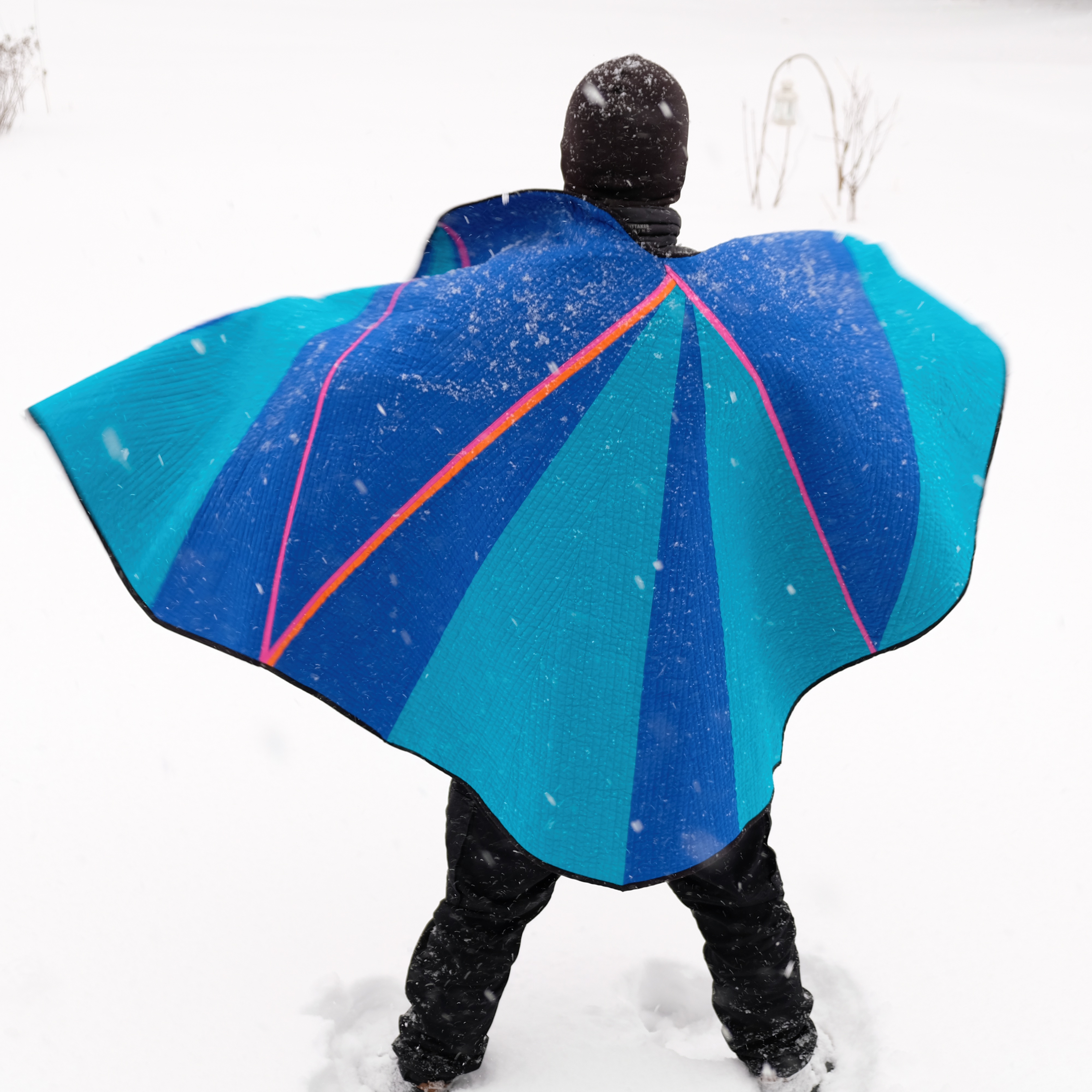
Royal blue was originally indigo in some early versions, but the meaning stayed consistent: harmony. The idea that different people, different lives, different ways of loving could coexist. Baker understood that a flag was itself an act of harmony, separate colours that only work together. See the Harmony quilt →
Purple, Spirit
The final stripe. Spirit. Not in the religious sense, but the animating force. The thing that makes a community more than a collection of individuals. Baker placed it at the bottom of the flag, grounding everything above it. See the Spirit Cape →
The Flag's Evolution
By 1979, the flag was reduced to six stripes: red, orange, yellow, green, blue, and purple. This version became iconic and remained the standard for nearly four decades.
In 2017, the city of Philadelphia added black and brown stripes to represent queer people of colour. In 2018, Daniel Quasar designed the Progress Pride flag, adding a chevron of black, brown, light blue, pink, and white (the colours of the trans flag) to the six-stripe rainbow. The chevron's arrow shape represents forward movement and the work still to be done.
In 2021, Valentino Vecchietti updated the design to include a yellow triangle with a purple circle, the intersex flag, creating what's sometimes called the Intersex-Inclusive Progress Pride flag.
Baker's original fabric flags deteriorated over the years. In 2023, one of the two surviving 1978 originals was displayed at the GLBT Historical Society in San Francisco.